


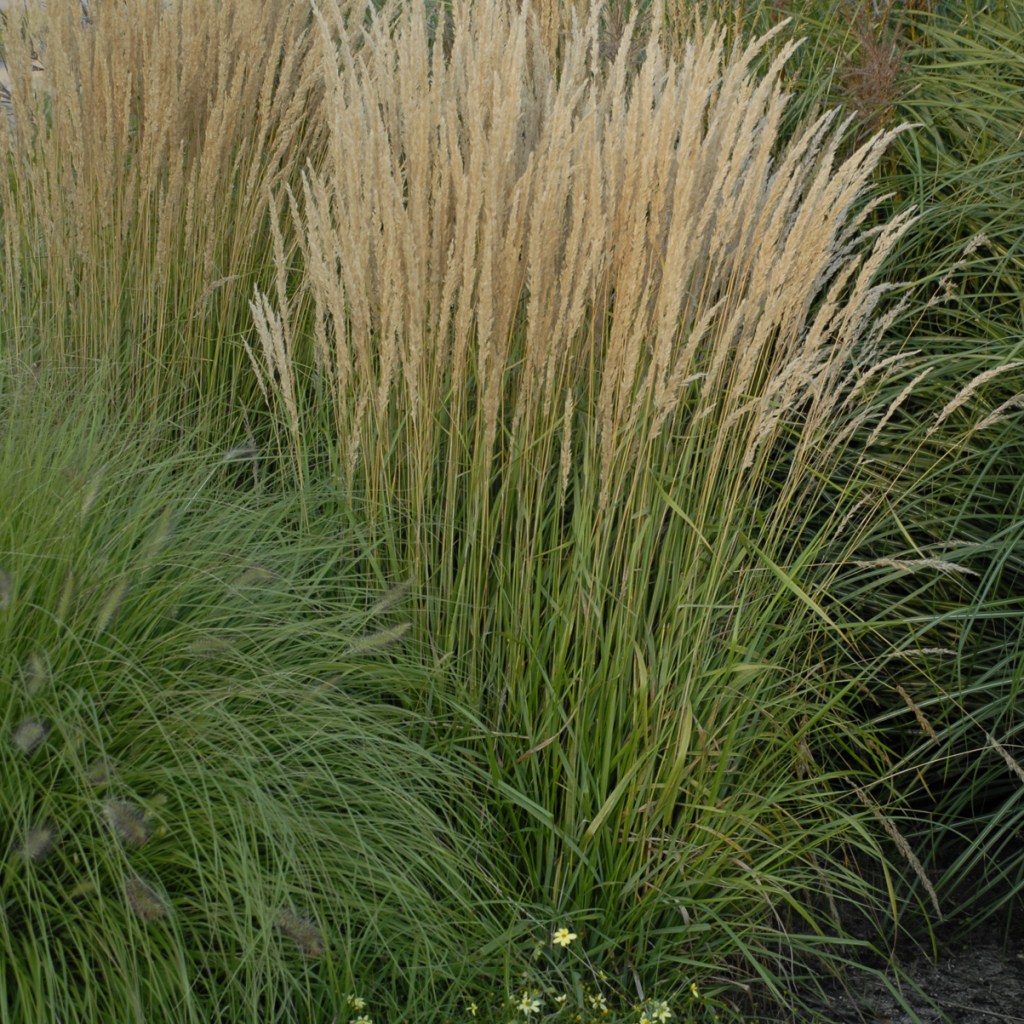
Photos thanks to Walters Gardens, Inc.
2001 Perennial Plant of the Year®
The Perennial Plant Association awarded the title of Perennial
Plant of the Year® 2001 to Calamagrostis xacutiflora ‘Karl Foerster’. The botanical name is from the Greek kalamos, a reed, and agrostis, a grass. This highly acclaimed cultivar is one of the most versatile, attractive, and low maintenance ornamental grasses. The deep green, shiny foliage of this cool season grass appears in early spring and lasts until early winter. Loose, feathery flower inflorescences appear in June and are initially light pink in color. As the seed heads mature, they become very narrow with a golden tan color that lasts through the fall season. The growth habit is vertical with a tuft of foliage 2-3 feet tall and flower stems to 5 feet in height. The narrow, tight habit of this cultivar creates a 18 inch wide clump. In mild winters the foliage rosettes remain evergreen or may show some growth.
Calamagrostis xacutiflora ‘Karl Foerster’ is reported to be a natural hybrid of Calamagrostis epigejos and Calamagrostis arundinacea. It was introduced to the nursery trade and general public in 1950 by Karl Foerster in his book Einzug der Graeser und Farne die Gaerten (The Use of Grasses and Ferns in the Garden), under the name of Calamagrostis epigejos ‘Hortorum’. According to Mr. Foerster, the source for the plant was the Hamburg Botanical Garden. The Foerster Nursery also listed this grass in their 1939 catalog but as an annual, not a perennial, grass. It was imported into the United States from Denmark in 1964. Since that time, this highly acclaimed ornamental grass has been distributed and has grown well in hardiness zones from 4 to 9.
Calamagrostis xacutiflora ‘Karl Foerster’ is a long-blooming, low maintenance, long-lived perennial grass for full sun to partial shade. This grass grows best in well-drained fertile soils with sufficient moisture, but will tolerate heavier clay soils and drier sites. Fertilizer may be required to produce maximum height. Low fertility will result in shorter plants. It is usually free of serious disease or insect problems although a foliar rust disease can occur in wet summers in situations with poor air circulation. Little maintenance is required except to cut back the stems to about 6 inches in late winter or early spring. In areas with mild winters the foliage may remain evergreen. This ornamental grass is a cool-season grass, which allows planting or transplanting in spring or fall. Sterility eliminates any chance of this cultivar becoming an invasive plant or create unwanted seedlings in the garden.
Karl Foerster called Calamagrostis xacutiflora ‘Karl Foerster’ the “metamorphic grass”. Others describe it as the “perpetual motion grass”. The slightest breeze sets this grass in motion. The graceful movement is a highlight for any landscape. It is excellent as a specimen plant or providing a vertical accent in the landscape. Some designers use it for creating a fast developing screen. Others find that this feather reed grass is useful in patio pot containers and will survive most winters without winter protection. Floral designers appreciate this cultivar for its use in fresh or dried arrangements. Stems cut before the flowers mature will last for months in an arrangement while maintaining the golden tan color. In heavy rain or wind the stems will dip and droop in all directions but return to vertical as soon as the storm passes. A combination of Karl Foerster feather reed grass with various other perennials makes a dramatic effect in the landscape. Consider combinations with late summer and fall-blooming perennials such as Coreopsis, Echinacea, Liatris, and Rudbeckia. It is understandable why Calamagrostis xacutiflora ‘Karl Foerster’ is one of the best-selling ornamental grasses year after year.
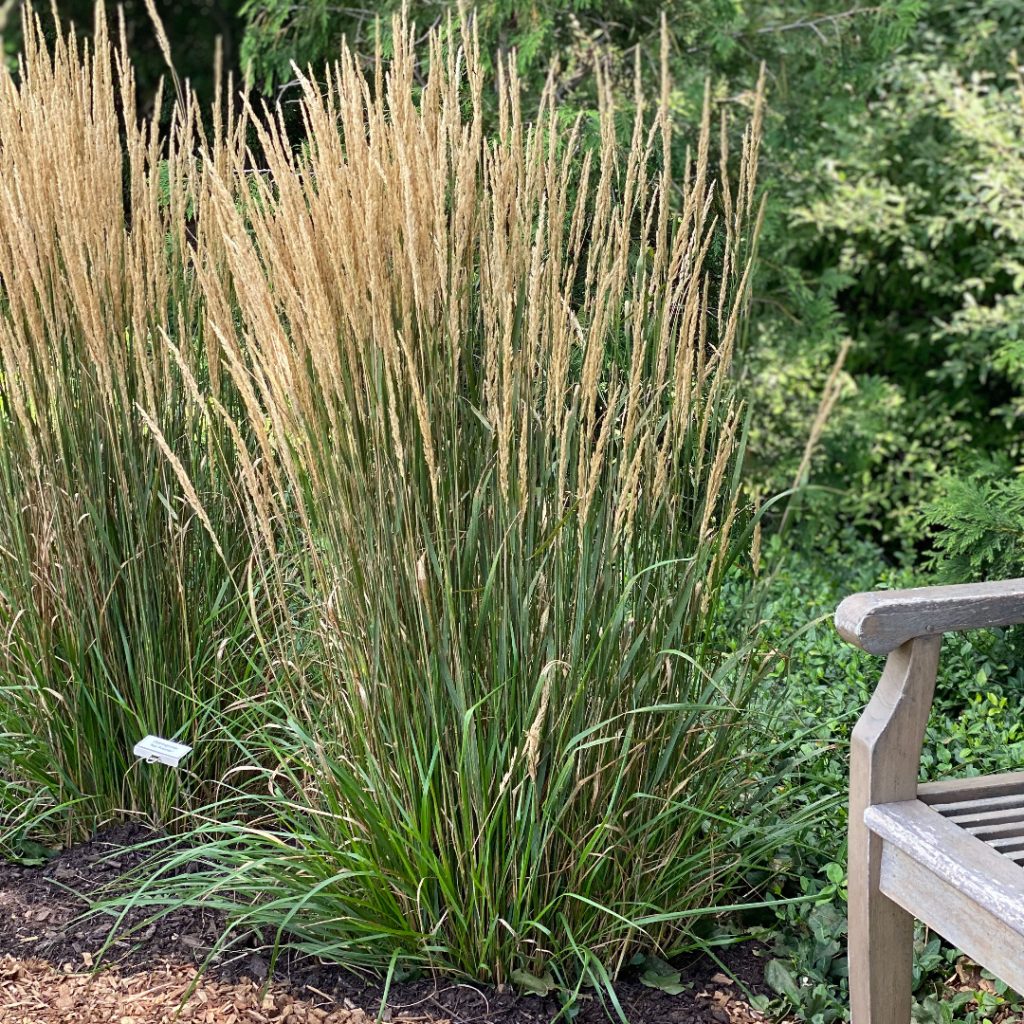

Photos thanks to Midwest Groundcovers.
PLANT DATA
Hardiness
USDA Zones 4 to 9
Light
Full sun to partial shade
Size
24-36 inches tall; 18 inches wide
Soil
Growth is optimal in well-drained fertile soils, but this perennial will tolerate heavy clay soils
 Perennial Plant of the Year®