

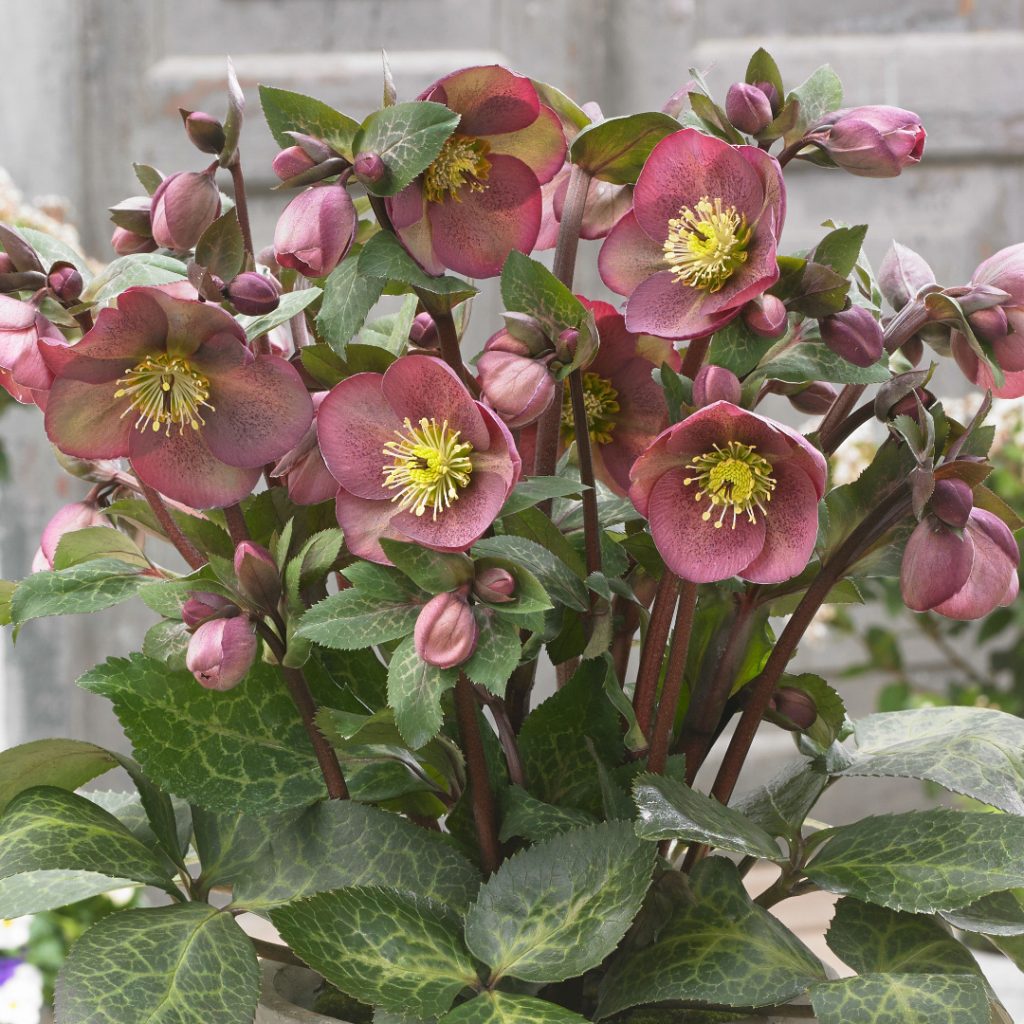
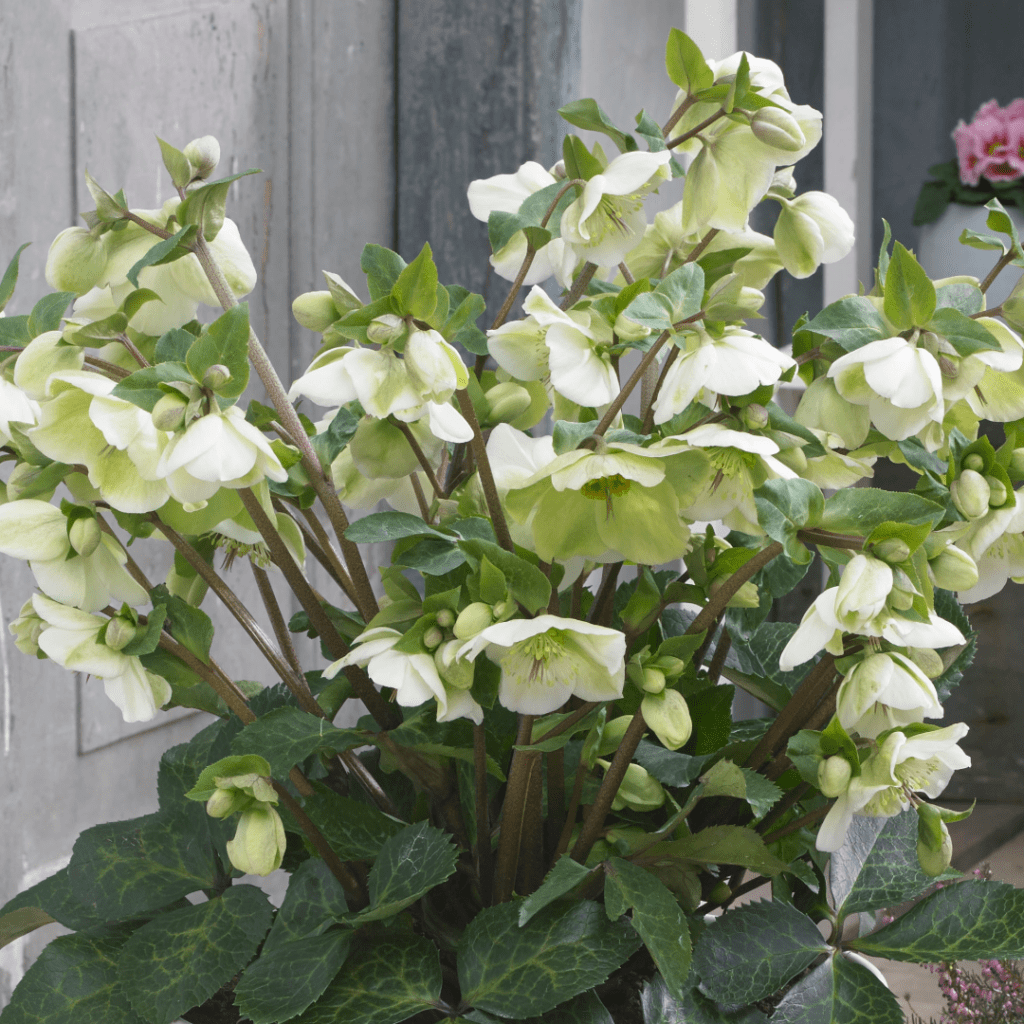
Photos thanks to Midwest Groundcovers (Pippa’s Purple and Molly’s White Hellebore).
2005 Perennial Plant of the Year®
The Perennial Plant Association named Helleborus xhybridus 2005 Perennial Plant of the Year®. The common name of this marvelous shade plant is Lenten rose. It is an evergreen, late-winter or early-spring flowering member of the buttercup family. Lenten rose is hardy from Zone 9 to Zone 4, and probably colder when plants have snow cover. Mature plants can form clumps that are 18″ to 24″ tall and 24″ to 30″ wide. Long lasting blooms are available in many colors and appear as single or double forms. Mature plants often have 50 or more flowers per plant. This evergreen perennial performs best in partial to full shade, but makes an outstanding combination plant for adding color, texture, and habit to the ornamental landscape.
Helleborus (hellebore), a member of the family Ranunculaceae, is a small genus containing 15 species of herbaceous perennials native to Europe and Asia. The true wild hellebore species are rarely found in gardens as hellebores hybridize easily providing garden plants with superior flowering and flower colors.
A rainbow of colors aptly describes the flowers of the present day hellebore garden hybrids. The flower colors range from pure white to a plum color bordering on black. Others are red, pink, yellow, and several with small to large spots on the inside of the flower. There are semi-doubles to doubles and some with picotee edges. There is a Lenten rose to delight any gardener in late winter, early spring to late spring. Most times the flowers last at least two months and in some climates even longer. Following flowering, the unusual seed pods provide an ornamental effect and can produce wonderful seedlings. The only thing that exceeds the ornamental value of these timeless beauties is the magnificent foliage. The leaves are divided into 7 to 9 segments and look like coarse leathery umbrellas. The foliage texture adds so much to the shade garden and is a perfect backdrop for bulbs and other perennials.
Lenten roses can be the stars of the early spring garden as specimen plants, massed to function as a foil for other spring beauties and may even be used as an elegant ground cover. Epimedium (barrenwort), Anemone nemorosa (wood anemone) and Hepatica (liverleaf), all spring flowering selections, are excellent companion plantings with Lenten rose. Later in the season the foliage is an impressive garden compliment that provides year round interest. Lenten roses are ideal for naturalizing in woodland areas. They are also excellent for planting on a hillside above a path where the flowers can be viewed from below. Helleborus xhybridus is one of the easiest plants to grow and anyone with a shade garden from neophytes to experienced gardeners will be delighted with their experience with Lenten rose.
Lenten roses are easily grown in well-drained, humus-rich and fertile garden soil. In southern regions, Lenten rose grows best in the shade of deciduous trees. In cooler regions they will grow in a sunnier site. T he major requirement for optimum growth is good drainage. Planting on a natural or created slope is ideal. Even in the driest of seasons, Lenten roses are tough plants that only require occasional watering after they become established plantings. The foliage remains evergreen in most areas of North America. If the leaves look a little tattered after the winter simply cut them off as the new foliage emerges in the spring. Long term exposure of the bare skin to Lenten rose leaves may cause mild dermatitis. Gardeners with skin sensitivities should wear gloves where prolonged exposure may occur. A good note about this is that alkaloids in the leaves that cause the dermatitis make the leaves undesirable to deer. Consequently, Lenten rose does not become part of the salad buffet for foraging deer.
PLANT DATA
Hardiness
USDA Zones 4 to 9
Light
Partial to full shade
Size
18-24 inches tall; 24-30 inches wide
Soil
Well-drained, humus-rich, fertile soil
 Perennial Plant of the Year®