
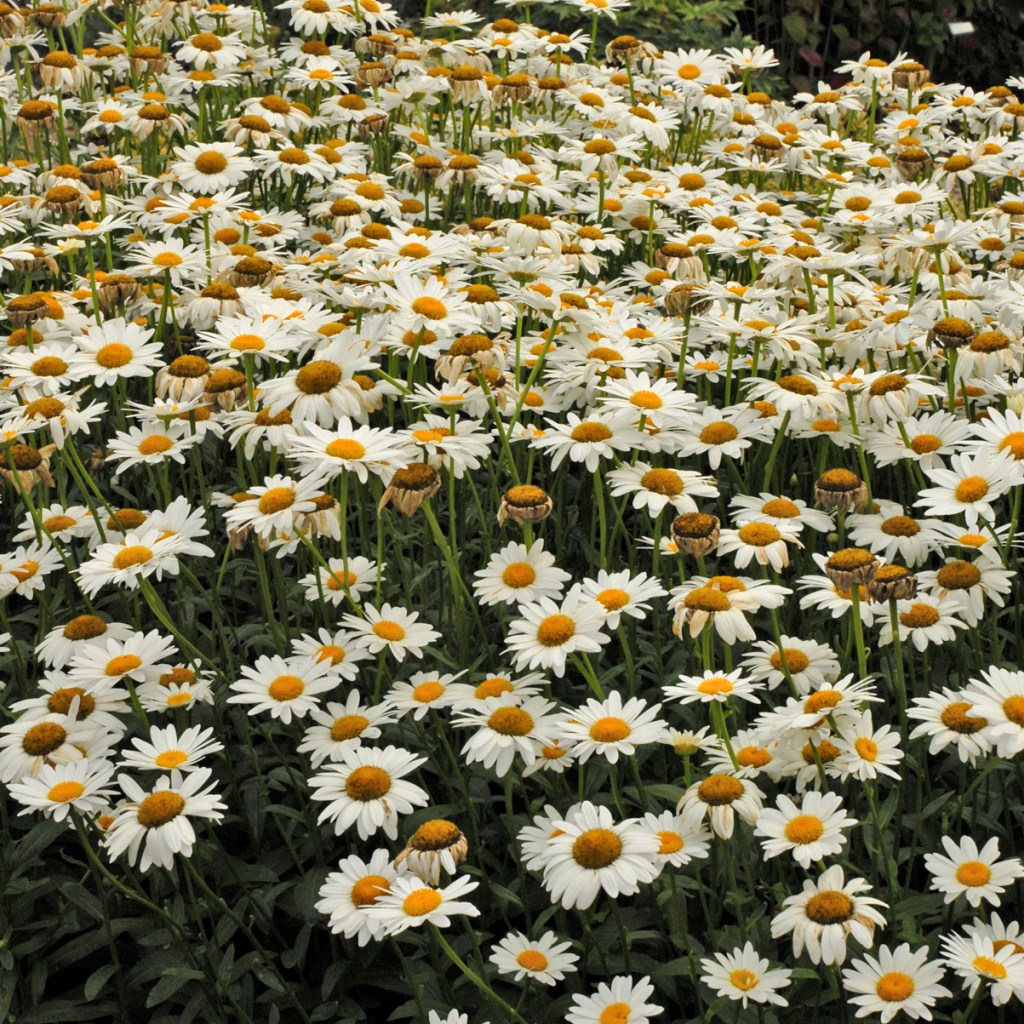


Photos thanks to Walters Gardens, Inc.
2003 Perennial Plant of the Year®
The Perennial Plant Association announced that the Perennial Plant of the Year® 2003 is Leucanthemum ‘Becky’. PPA members selected the Becky Shasta daisy on the basis of its bright white flowers, sturdy stems that resist lodging, and long season of bloom. Leucanthemum ‘Becky’ has proven to be a lovely and dependable perennial for herbaceous borders across the country.
Contemporary nomenclature now lists this Shasta daisy, formerly a member of the genus Chrysanthemum, as Leucanthemum ‘Becky’ Superbum Group. Shasta daisy is a member of the Asteraceae family and is a hybrid created by Luther Burbank in 1890. The name of “Shasta daisy” supposedly comes from the fact that the clean white petals of this daisy reminded Burbank of the snow on Mount Shasta in California. ‘Becky’ has sturdy, upright stems that grow 40 inches tall, with a similar spread. Three-inch wide, single white flowers with contrasting yellow centers appear at the end of June or early July when other Shastas are finishing. Flowering continues throughout August and often into September. Becky Shasta daisy grows well in hardiness zones 4 to 9.
To gardeners, daisies have always exuded charm and friendliness. As a child many people remember running through a field of wild daisies or picking some for their mothers or teachers. Gardeners have long valued daisies of all types as excellent pass-along plants. Leucanthemum ‘Becky’ is the quintessential daisy.
The saga of Leucanthemum ‘Becky’ starts with Jimmy and Becky Stewart of Atlanta, Georgia. Jimmy and Becky received a Shasta daisy, from their neighbor, Mary Ann Gatlin who in turn had obtained it from her mother, Ida Mae. In the 1960s Ida Mae had spotted this daisy blooming in an Atlanta-area garden and was so taken with it that she approached the owner and offered to buy a clump. The owner gladly accepted Ida Mae’s proposal and quickly filled her car trunk with Shasta daisies. Ida Mae had a successful florist/nursery business and sold ‘Becky’ as a garden plant and also as a cut flower. In the mid-1980s Bill Funkhouser visited the Stewart garden and was impressed with the pass-along daisy. Unable to find a clear identity for this excellent plant, Bill chose to call it Chrysanthemum ‘Becky’ to honor Becky Stewart. The Stewarts later discovered that nurseryman Bud Heist had received the daisy from the Gatlins and was growing it under the name of ‘Ida Mae’. Ryan Gainey of Atlanta had also passed along this daisy to the Goodness Grows nursery that dubbed it “Ryan’s Daisy”. Later Bill Funkhouser joined the Wayside Gardens staff and he included this daisy in the Wayside catalog as Leucanthemum ‘Becky’.
Leucanthemum ‘Becky’ is a wonderful choice to be grown as a specimen or en masse in the perennial border, in naturalistic landscapes, to attract butterflies, for garden bouquets, and even in large containers. It can be one of the main stalwarts of the summer border. Plant with Perovskio otriplicifolia (Russian sage) for a long season of bloom. Place Scabioso columbario ‘Butterfly Blue’ (pincushion flower) in front and add Veronica ‘Royal Candles’ for a lovely combination of white, blue and blue-lavender. For extra zing, add Crocosmio ‘Lucifer’ a brilliant scarlet red, summer flowering bulb.
An excellent cultivar of an old-fashioned favorite, Becky Shasta daisy grows best in full sun and well-drained soil. Plants are not tolerant of excessive moisture or wet soils in winter. Dead heading encourages rebloom and extends the flowering season into autumn. Stems can be cut back to the lower foliage after flowering to tidy the plant. The flower stems ore strong enough to keep this daisy upright after a heavy rain and to make it an excellent cut flower. Many Shasta daisies do not grow well in the hot, humid temperatures of the South and are not hardy in cold northern winters. ‘Becky’ is superior to other Shasta daisies due to its robust habit and its good performance in both southern and northern climates.

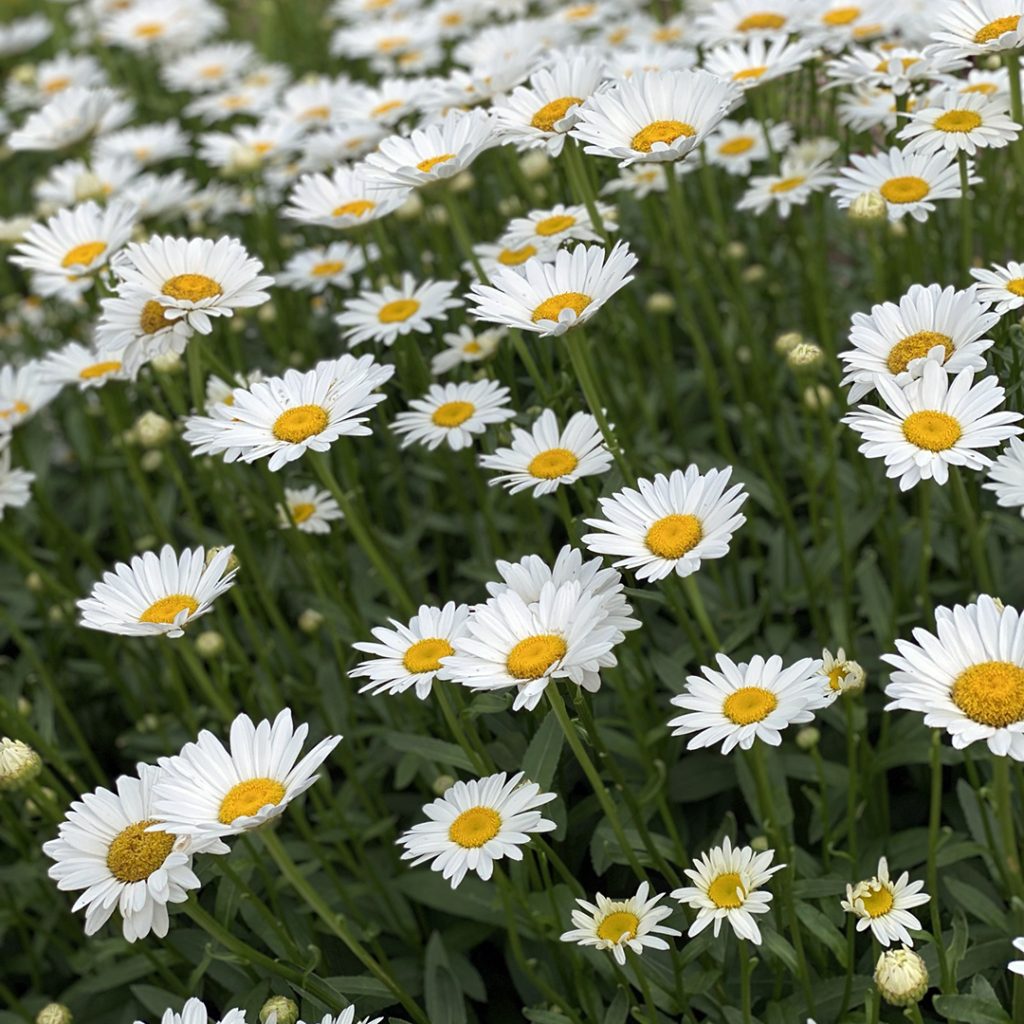
Photos thanks to Midwest Groundcovers.
PLANT DATA
Hardiness
USDA Zones 4 to 9
Light
Full sun. Tolerant of partial shade.
Size
40 inches tall; 40 inches wide
Soil
Growth is optimum in moist, well-drained soil
 Perennial Plant of the Year®