

Photos thanks to Chicago Botanic Garden.
2022 Perennial Plant of the Year®
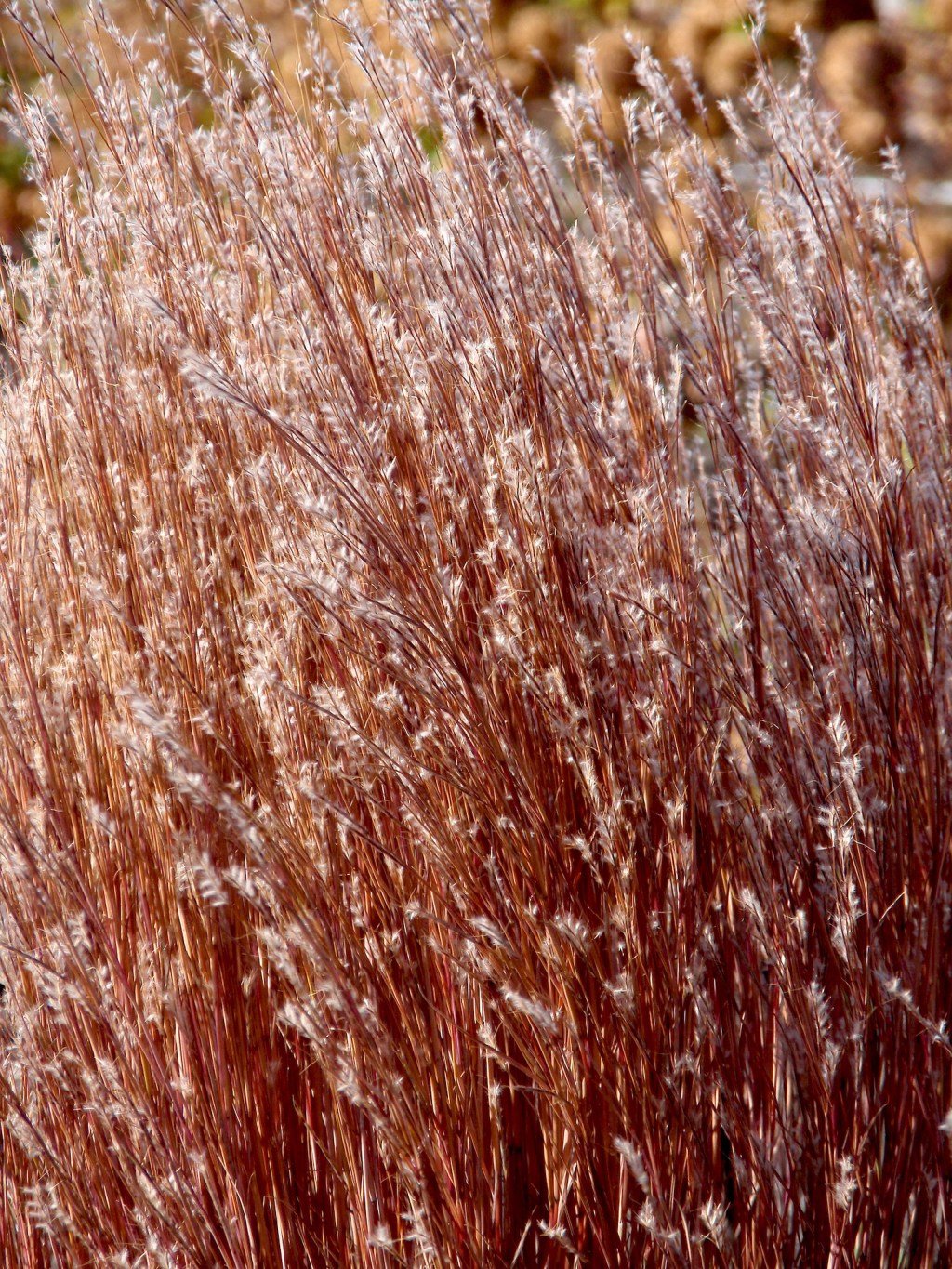
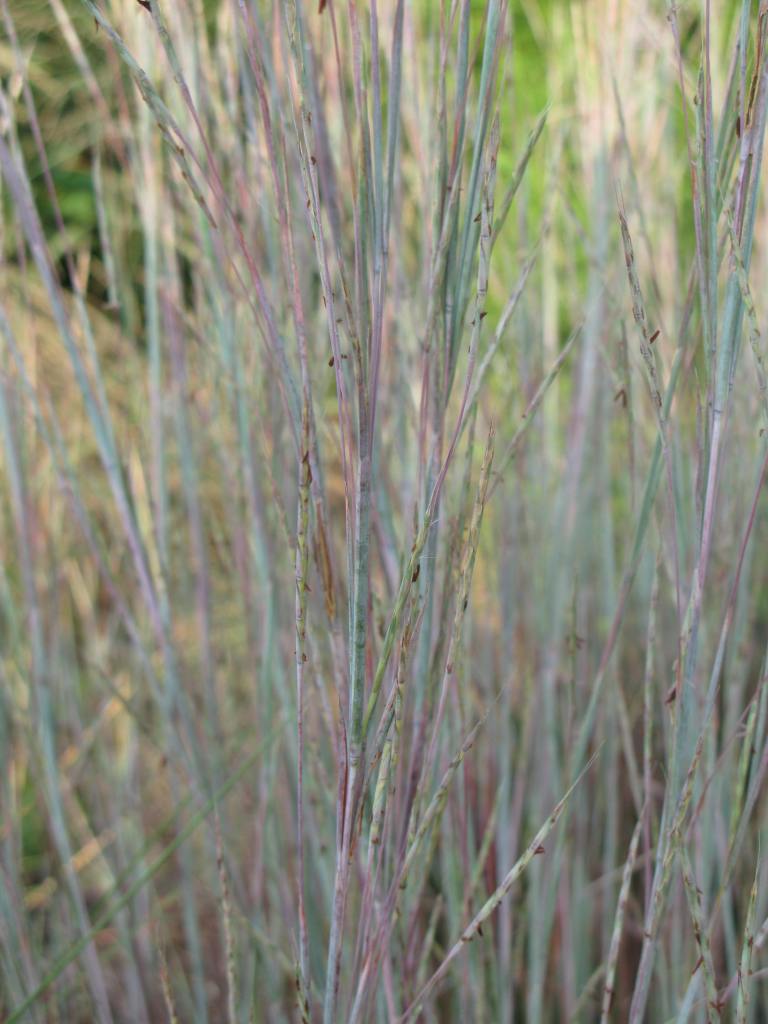
Summer through fall, the slender leaves and stems of little bluestem are an ever-changing kaleidoscope of gray-green, blue, pink, purple, copper, mahogany, red, and orange tones. Wispy silver-white seed heads sparkle in autumn sunlight and coppery brown leaves persist through winter.
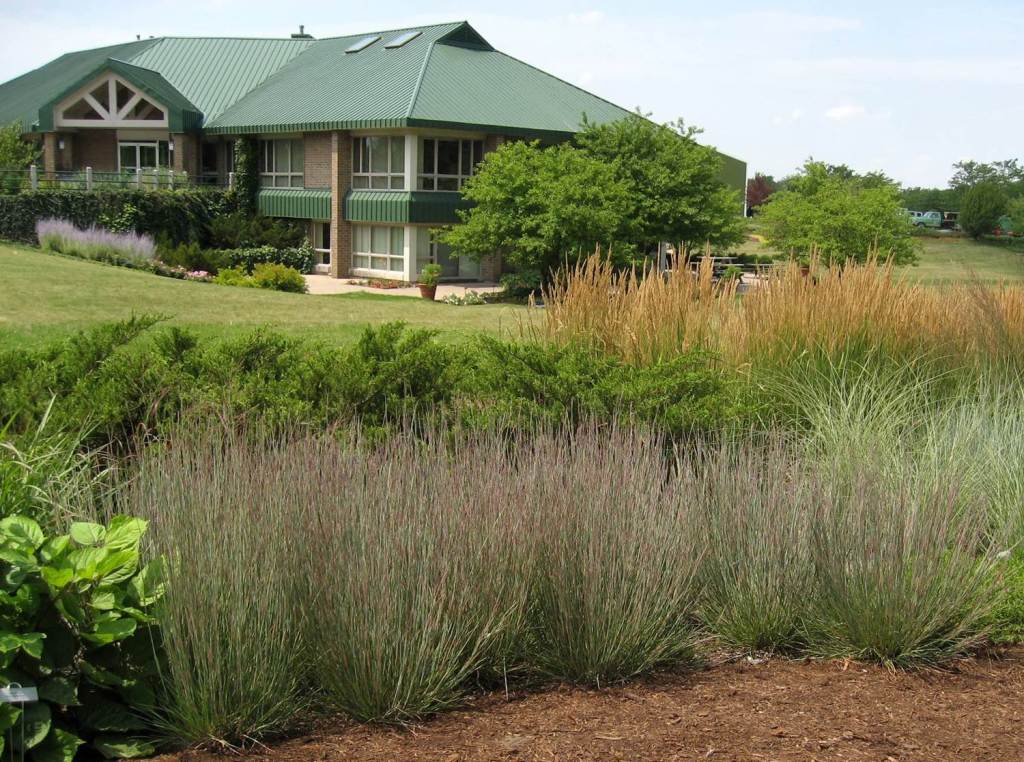
Little bluestem is a tough and dependable clumping grass that blends well with perennials such as asters, sedums, coneflowers, and other grasses. Native grasses play their part in the pollinator story too. Little bluestem is a larval host for a variety of butterflies and moths such as crossline skipper, Dakota skipper, and Ottoe skipper.
Native to a broad swath of North America, it was one of the dominant grasses of the vast tallgrass prairies. In average to lean, well-drained soils, stems will remain upright but can flop easily if conditions are too rich or moist. Cultivars have been selected for shorter plants, enhanced leaf colors, and stronger stems.
Little bluestem’s spikiness complements native and non-native perennials alike. An easy fit for mass plantings or meadows, it is just as brilliant in traditional borders, gravel gardens, and green roofs. Perfect partners are recent PPOYs such as Calamintha nepeta ssp. nepeta, Asclepias tuberosa, Stachys ‘Hummelo’, and Allium ‘Millenium’.
What little bluestem will work best for you?
Check out what horticulture professionals have picked as top performers in their regions!
Midwest
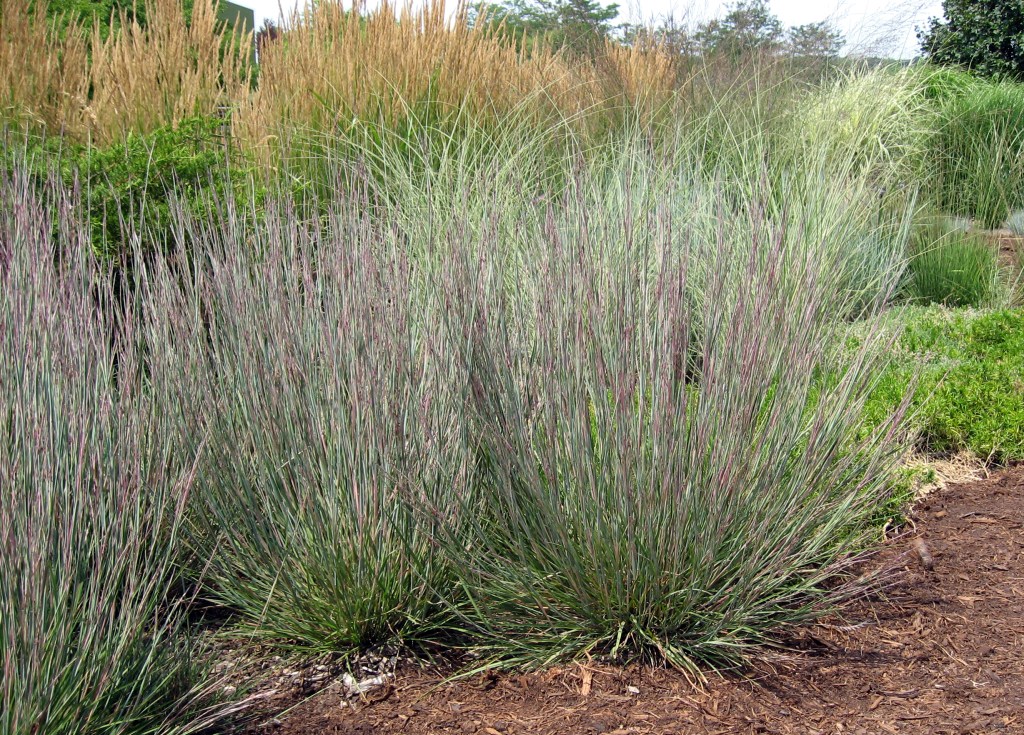
Richard Hawke with the Chicago Botanic Garden selected Schizachyrium scoparium ‘Jazz’ for the Chicago region.
“The striking silvery blue leaves of ‘Jazz’ are most comparable to ‘The Blues,’ but at 36 inches tall and 30 inches wide, ‘Jazz’ is a foot shorter than ‘The Blues’ and has sturdier stems. ‘Jazz’ was upright at all times including winter during the Chicago Botanic Garden’s trial. The late-season silvery seed heads are followed by a strong purple to deep bronze fall color. ‘Jazz’ was introduced by Brent Horvath at Intrinsic Perennial Gardens in Illinois.”
Photography Credit: Richard Hawke

Great Lakes
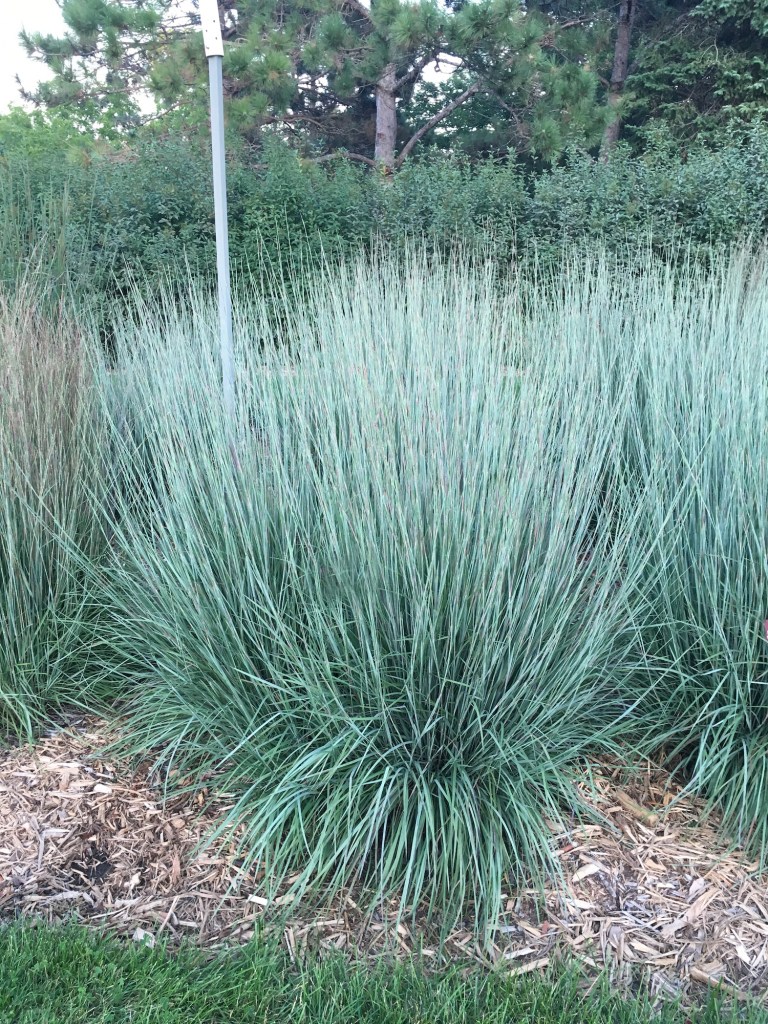
Patty Steinhauser with Stonehouse Nursery chose Schizachyrium scoparium ‘Carousel’.
“This uniquely mounded selection forms a wide clump of blue-green foliage that emerges nearly horizontal and matures into strong, upright stems that remain standing through inclement weather and winter. Takes on pink, copper and orange-red tones in fall topped with tiny seed tufts.”
Photography Credit: Stonehouse Nursery
Mid-Atlantic
Taylor Pilker with Cavano’s Perennials suggested ‘The Blues’, ‘Standing Ovation’, and ‘Jazz’, and said they recently added ‘Blue Heaven’ (pictured) and ‘Prairie Blues’ to their inventory.
“I liked Blue Heaven. It was taller and had good autumn color with a wide range of shades of burgundy and pink. It remained upright in the pot and didn’t flop.”
Photography Credit: Hoffman Nursery

Southeast
Shannon Currey (then at Hoffman Nursery) selected Schizachyrium scoparium ‘The Blues’ and Schizachyrium scoparium ‘Standing Ovation’ PP25202 (pictured).
“In the Southern Region, our humidity, high nighttime temps, and wet springs can slow down some Little Bluestem. My picks for us are ‘The Blues’ and ‘Standing Ovation’. ‘The Blues’ is a strong, vigorous grower and has fantastic color. Blues, pinks, purples in the summer followed by reds and oranges in the fall. In the right conditions, it stands out for us. The downside is that it can flop if it doesn’t get full sun or is placed in fertile soils or irrigated sites. That’s why I’d add ‘Standing Ovation’ to the mix. It’s a good grower for us and produces beautiful colors. It doesn’t flop when placed in fertile or irrigated sites, which is a big plus for those wanting a tidier look.”
Photography Credit: Hoffman Nursery
Pacific Northwest and Rocky Mountains
Nanci Hollerith Allen noted that Schizachyrium scoparium can be a tricky plant unless you have reasonably dry well-drained soil. She shared two recommended cultivars: ‘The Blues’ and ‘Standing Ovation’ (pictured). Nanci commented that these plants require “full sun and low water or it gets floppy thus making our fall, winter, and spring a challenging choice in PNW. Winter wet is our curse.”

Canada
Tony Post chose Schizachyrium scoparium ‘Standing Ovation’.
“‘Standing Ovation’ adds excellent texture to the summer garden. Burgundy highlights add late season interest. Seed heads are attractive, particularly when backlit.”
Photography Credit: Tony Post


Photos of thanks to Hoffman Nursery.
PLANT DATA
Hardiness: USDA Zones 3 to 9; AHS Heat Zones 7-1.
Light: Full sun
Size: 24-48 inches tall and 18-24 inches wide; cultivar sizes vary
Native Range: Eastern North America Alberta to Quebec south to Arizona and Florida
Soil: Dry to medium, well-drained soils. Adaptable to a range of conditions such as clay and poor soils. Does not like overly wet conditions.
Maintenance: Low-maintenance perennial grass. Cut back in late winter to early spring. Good drought resistance once established, and tolerant of heat and humidity.
 Perennial Plant of the Year®