
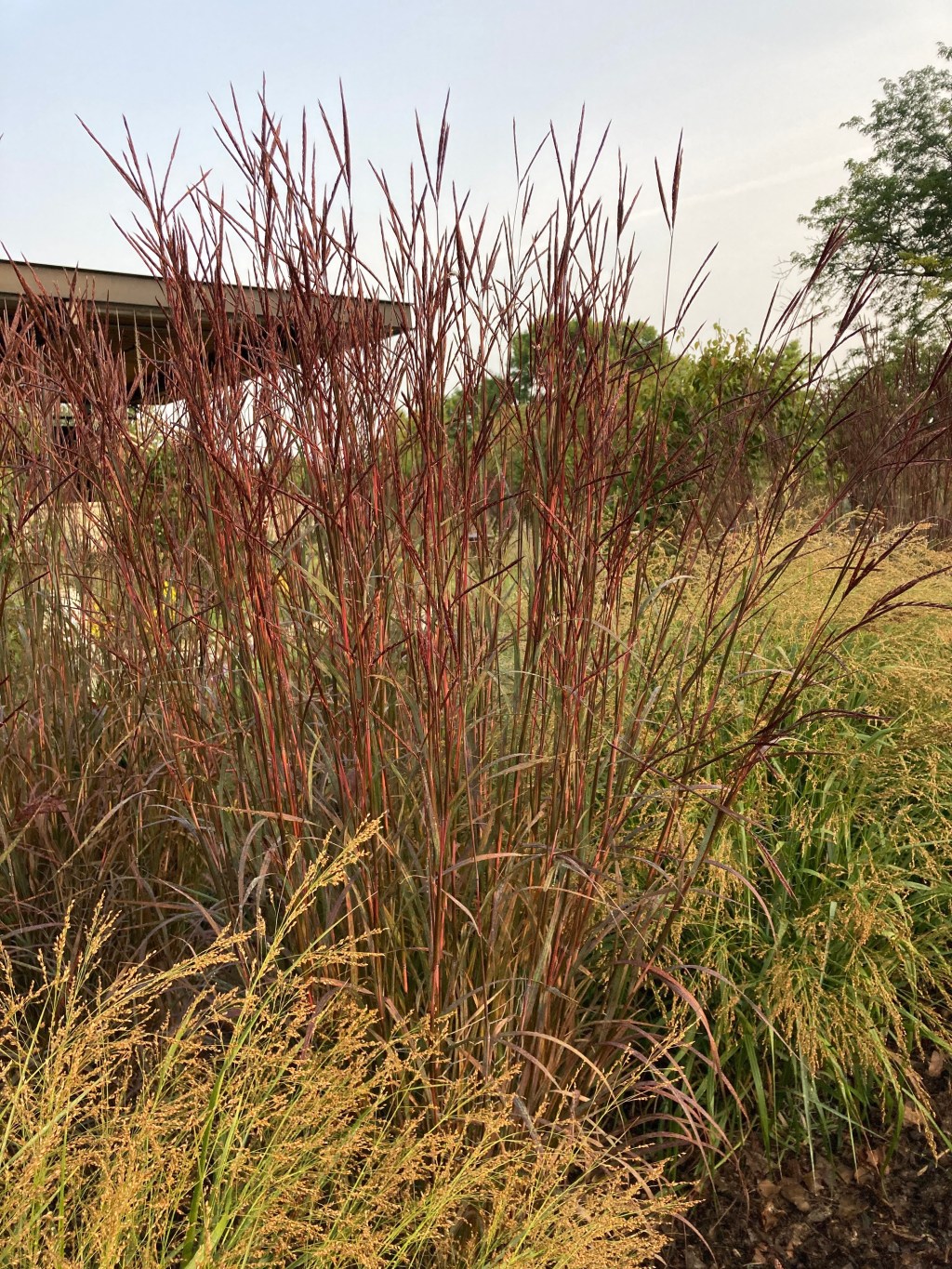
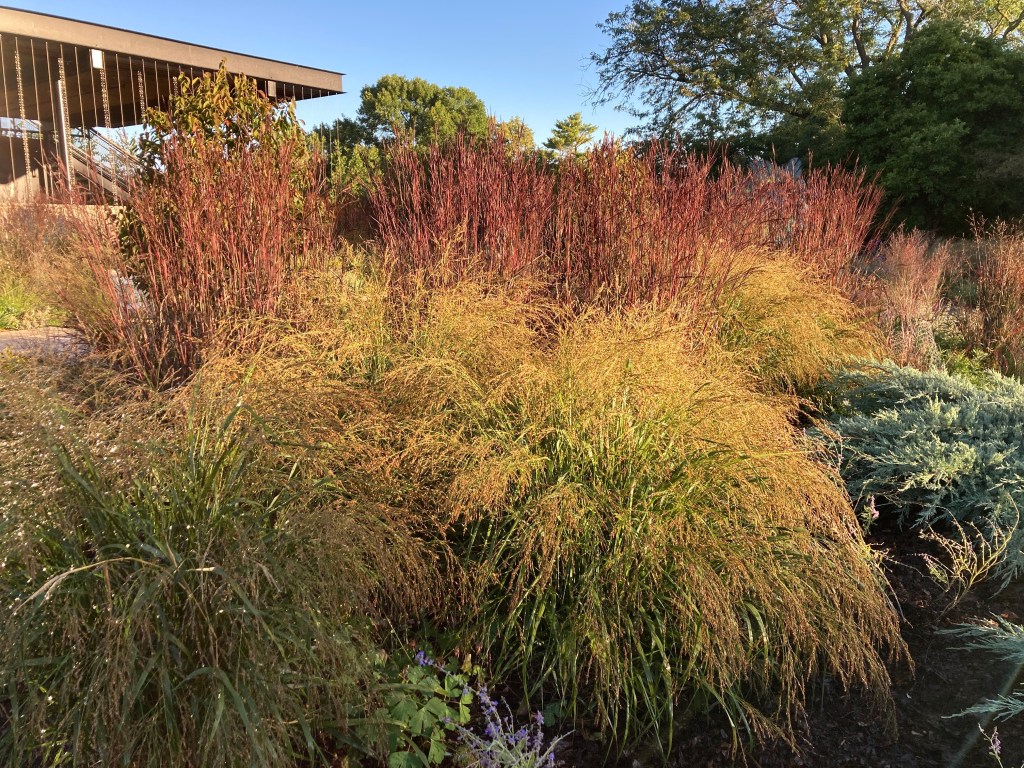
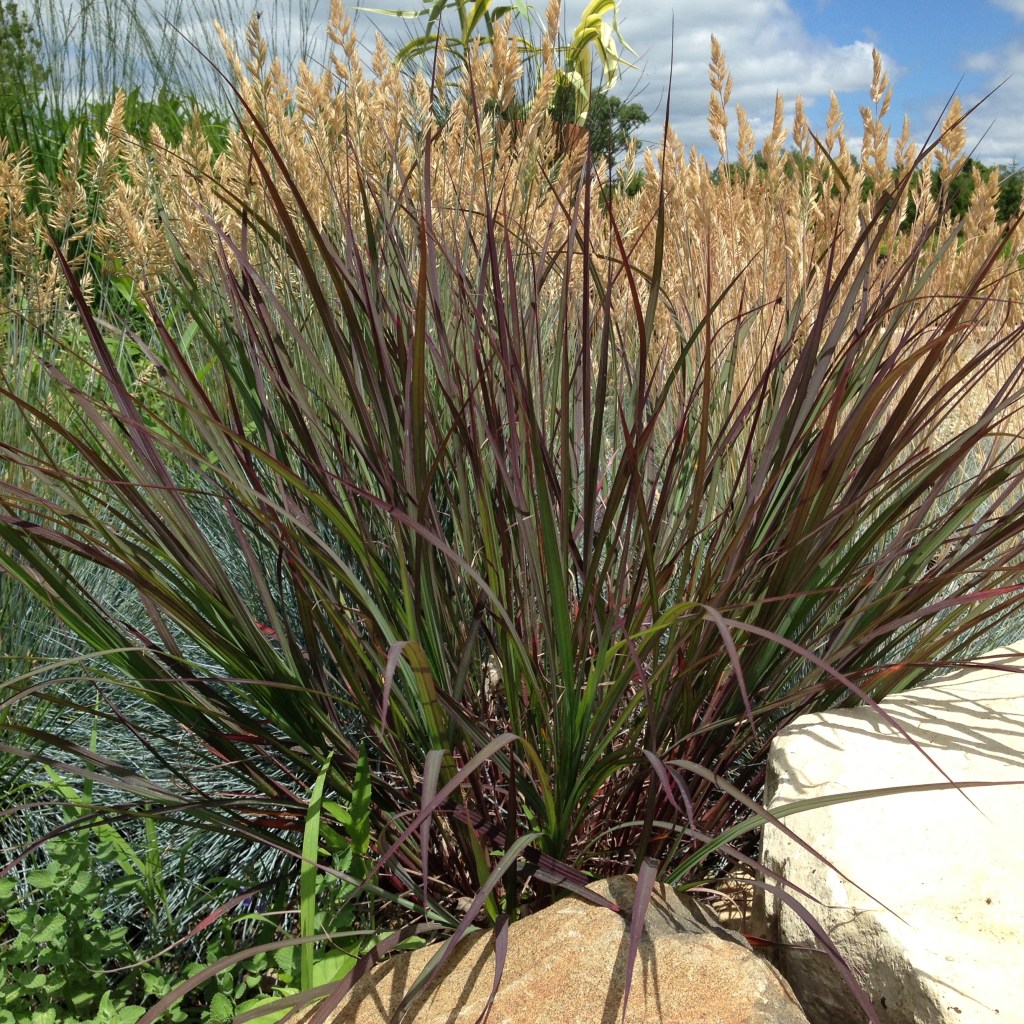
Photos of Andropogon gerardii ‘Blackhawks’ thanks to Olbrich Botanical Gardens and Intrinsic Perennial Gardens.
2026 Perennial Plant of the Year®
With near-black coloration and a strong vertical habit,‘Blackhawks’ big bluestem adds drama to the fall garden. Foliage emerges dark green, developing reddish-purple tips as the summer progresses. In August, three-parted “turkeyfoot” inflorescences arise and by September the leaves, stems, and blooms take on a deep purple hue. More compact than other big bluestem cultivars, ‘Blackhawks’ reaches five feet tall by two feet wide.
Big bluestem is one of the dominant grasses in North America’s once extensive tallgrass prairies. Its leaves and stems provide cover and nesting material for birds and serve as a larval food source for several species of skippers. It will remain a single, dense clump but may reseed in the garden. This species has no major pest or disease problems and requires no maintenance other than cutting back to the ground in late winter. Big bluestem is extremely drought tolerant once established, which may take a few years.
The excellent attributes of ‘Blackhawks’ qualified it among the top-rated selections in the Chicago Botanic Garden’s comparative trial of ornamental grasses. This warm season grass is ideal for native, naturalistic, and cottage-style plantings. In late spring and summer, the two-toned effect of ‘Blackhawks’ makes an interesting foil mingled with early flowering perennials. Later in the season, the tall flower spikes add texture and movement among fall bloomers such as black-eyed Susans (Rudbeckia spp.), tall stonecrops (Hylotelephium spp.), and asters (Symphyotrichum spp.).
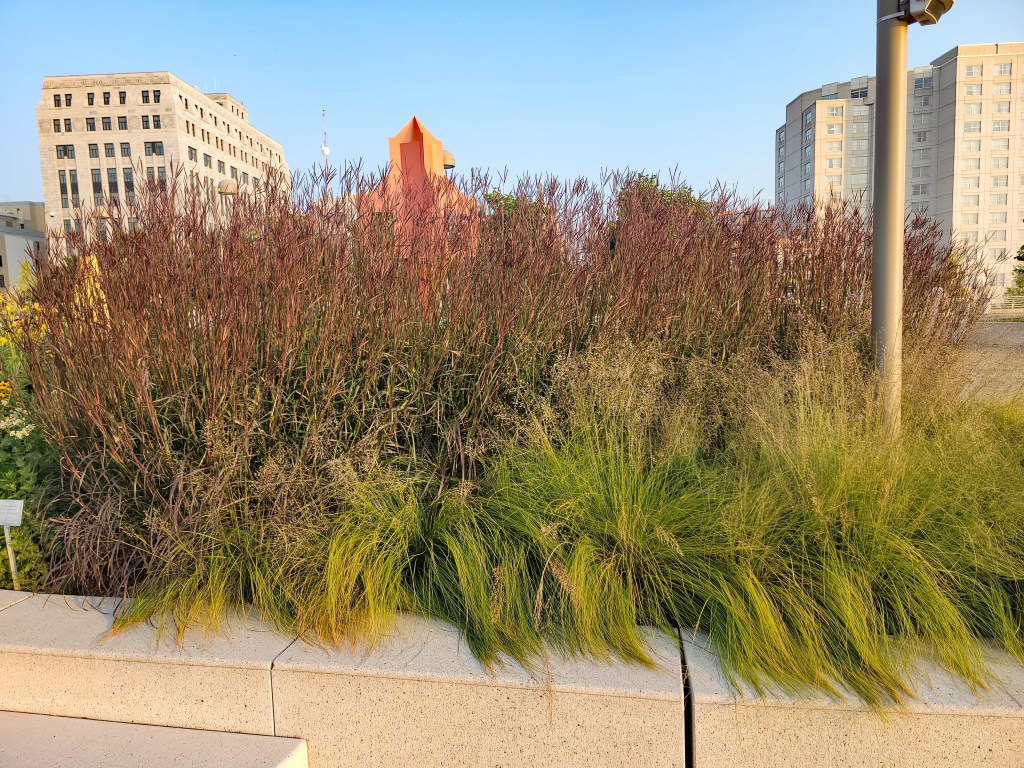
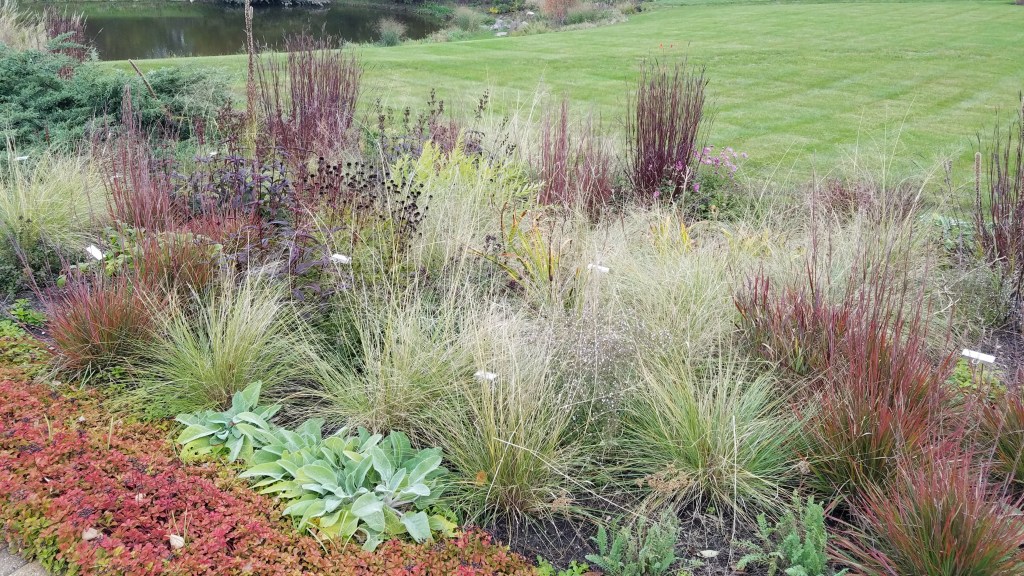
Photos of Andropogon gerardii ‘Blackhawks’ thanks to Ed Lyon and Midwest Groundcovers.
PLANT DATA
Hardiness
USDA Zones 3 to 9
Canadian Hardiness Zones 3 to 9
AHS Heat Zones 4 to 9
Light
Full sun
Size
60 inches (152 cm) tall and 24 inches (60 cm) wide
Origin
Originated as a seedling from Andropogon gerardii ‘Red October’. Introduced by Brent Horvath, Intrinsic Perennial Gardens, Hebron, Illinois. Andropogon gerardii is native throughout a wide area of the eastern and central United States into Canada and Mexico.
Soil
Average, dry to medium, well-drained soils. Adaptable to a wide range of soil conditions. May flop in fertile, moist soils.
Maintenance
Cut foliage to the ground in late winter before new growth emerges.
 Perennial Plant of the Year®