
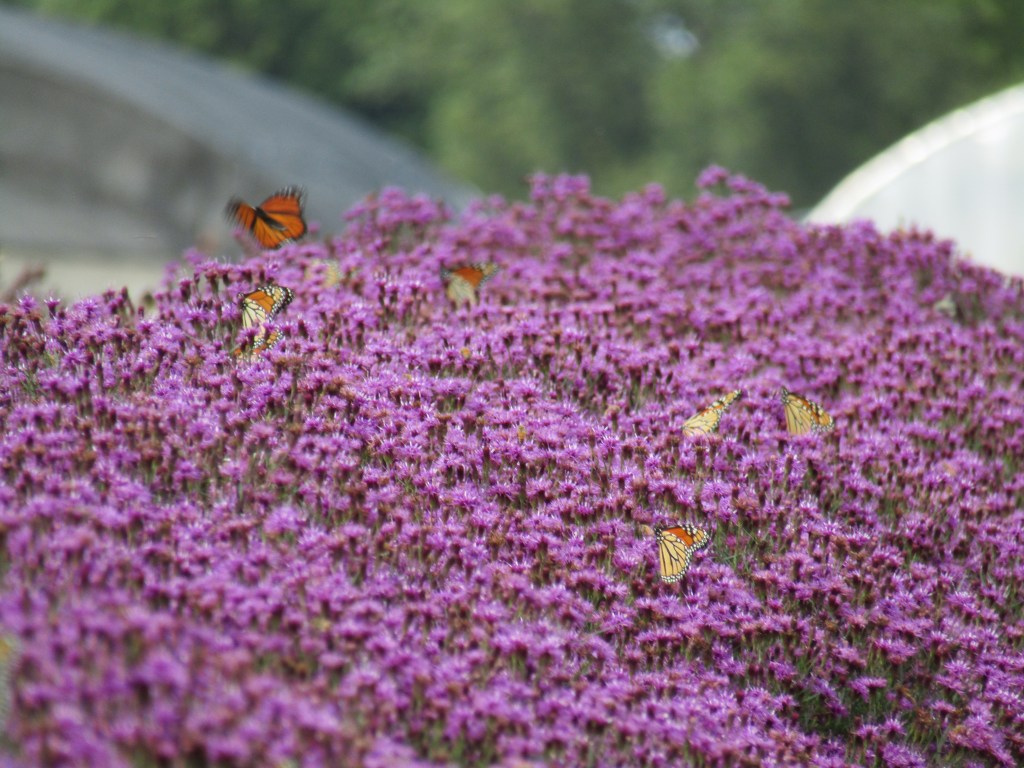
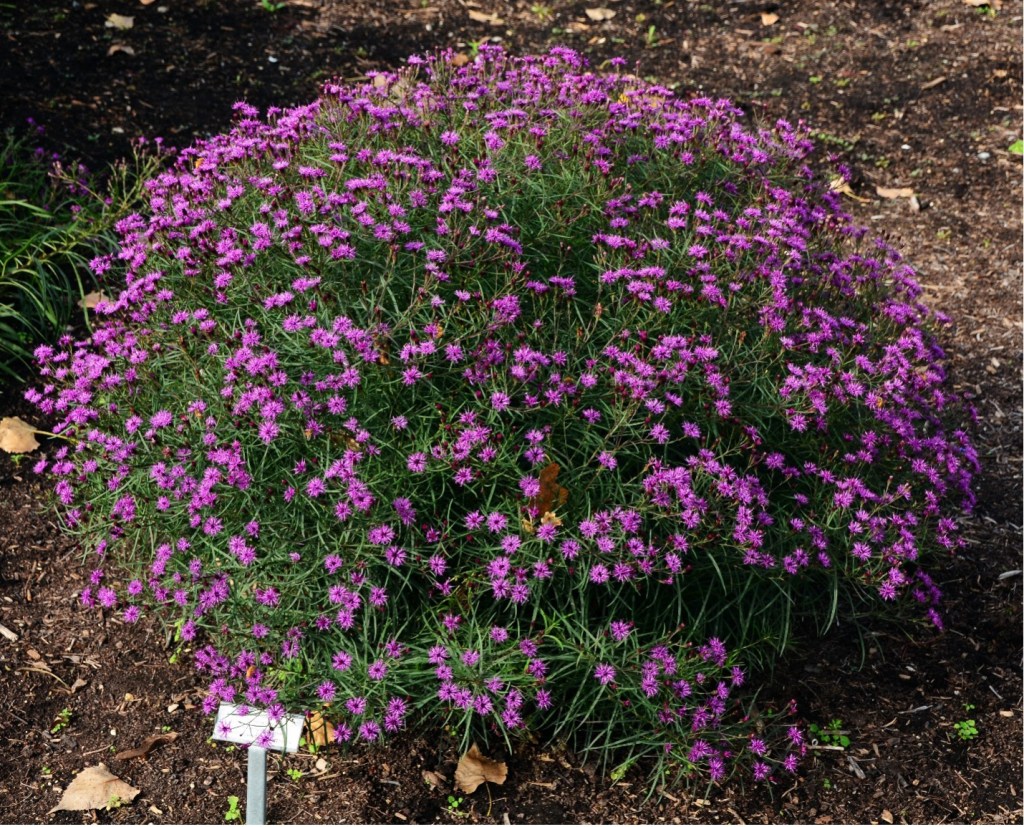
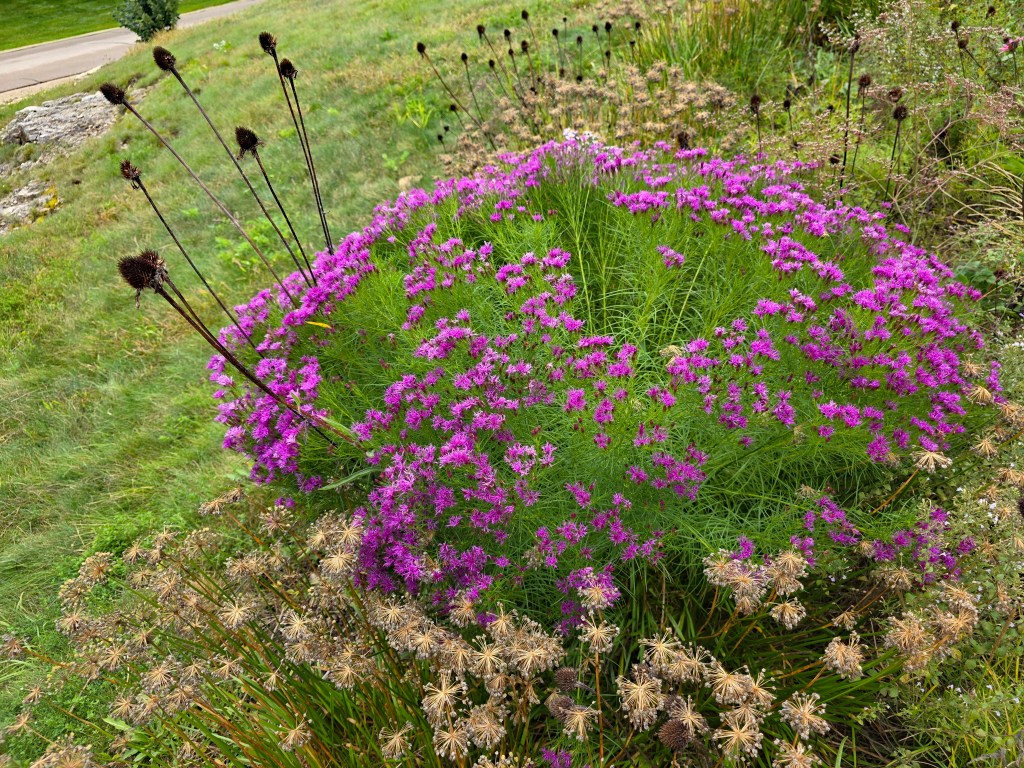
Photos thanks to Chicago Botanic Garden and Ed Lyon.
2027 Perennial Plant of the Year®
Heralding the transition from summer to fall, ‘Summer’s Swan Song’ erupts in sprays of deep purple flowers from early September to mid-October. ‘Summer’s Swan Song’ is a magnet for butterflies and bees during its six-week bloom period, providing the pollinator benefits of our native ironweeds in a smaller package. While some ironweeds reach up to 10 feet or more, ‘Summer’s Swan Song’ fits easily into most gardens, remaining a compact clump 36 inches tall by 40 inches wide. The narrow olive-green leaves on reddish stems give ‘Summer’s Swan Song’ a feathery texture, and the rounded mounds are less prone to lodging due to the interlocking nature of the elongated inflorescent branches. After blooming, seed heads resembling fluffy pom-poms carry interest through the winter.
‘Summer’s Swan Song’ requires full sun and tolerates a range of moisture levels and soil types. The foliage of ‘Summer’s Swan Song’ looks pristine throughout the season thanks to its excellent powdery mildew and rust resistance.
‘Summer’s Swan Song’ adds a delicate texture in spring and summer before bursting with a pop of late-season color. It is well suited for mass plantings, pollinator gardens, and rain gardens—its tidy habit fits into traditional borders and naturalistic plantings alike. Incorporate it among medium-sized perennials such as asters (Symphyotrichum spp.), black-eyed Susans (Rudbeckia spp.), and little bluestems (Schizachyrium scoparium), or in the foreground of taller Joe Pye weeds (Eutrochium spp.), sunflowers (Helianthus spp.), and switchgrasses (Panicum virgatum).
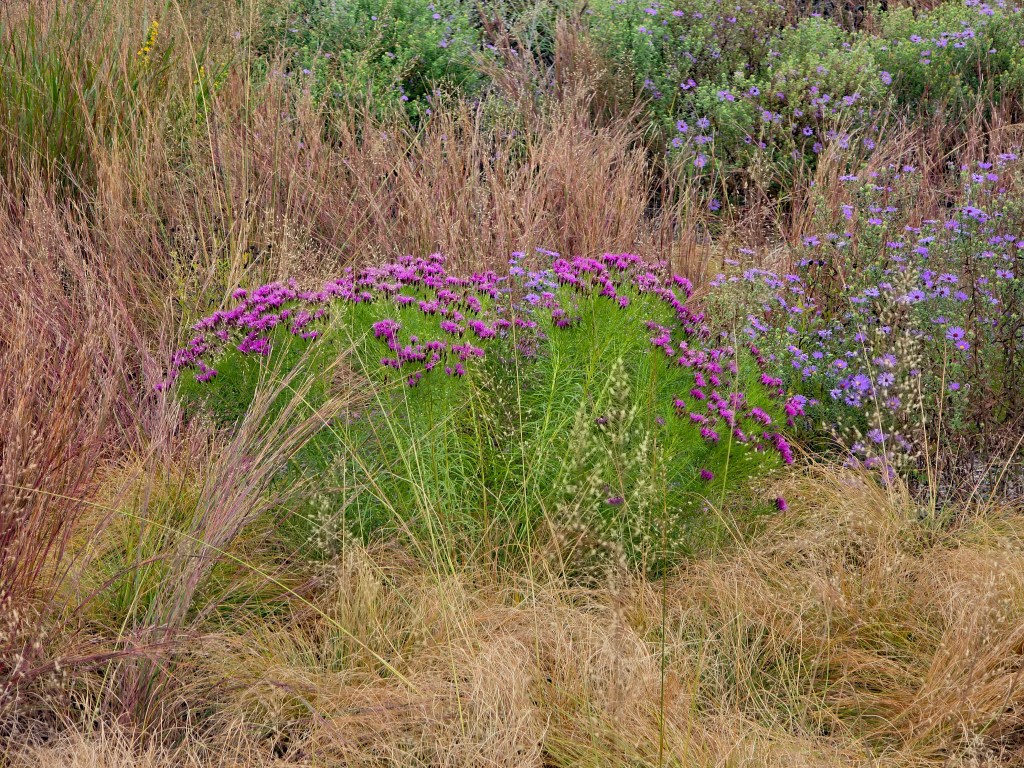
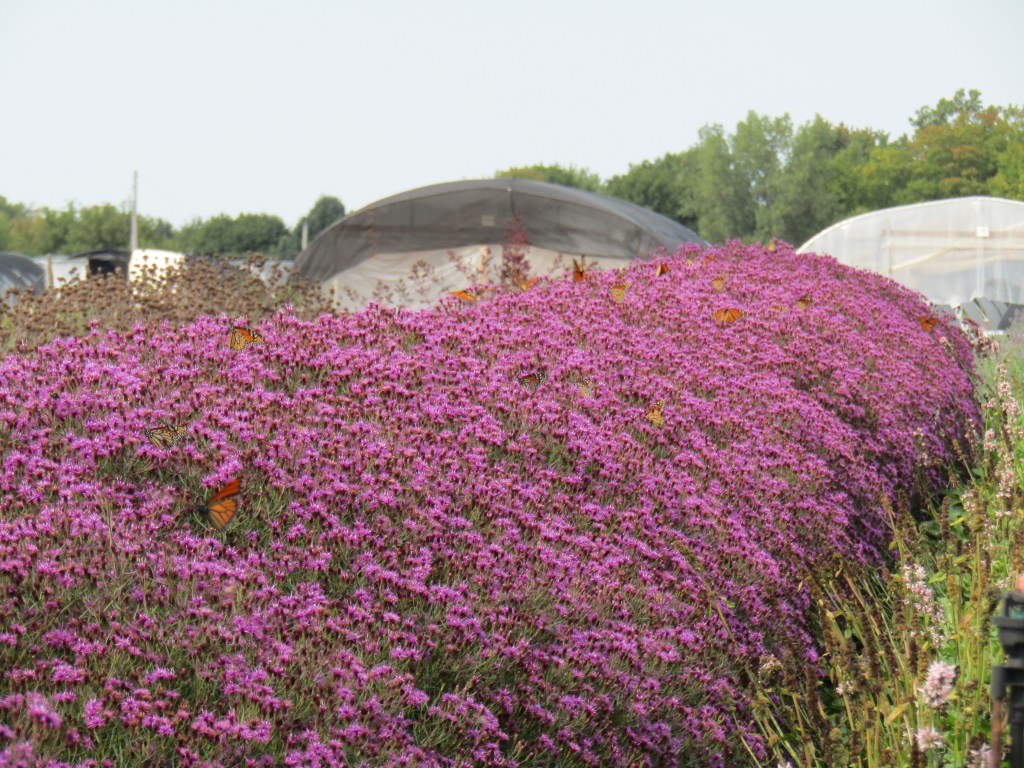
Photos thanks to Ed Lyon and Twixwood Nursery.
PLANT DATA
Hardiness
USDA Zones 4 to 9
Canadian Hardiness Zones 4b to 9a
Light
Full sun
Size
36 inches (91 cm) tall and 40 inches (102 cm) wide
Origin
Vernonia ‘Summer’s Swan Song’ originated as a cross between V. lettermannii and V. angustifolia ‘Plum Peachy’ made by Dr. Jim Ault at the Chicago Botanic Garden. Vernonia species occur widely across the eastern and central United States—V. lettermannii is native to western Arkansas and southeastern Oklahoma, while V. angustifolia is found along the Southeastern Coastal Plain from North Carolina to Mississippi.
Soil
Prefers well-drained soil with even moisture but tolerates a wide range of soil types.
Maintenance
Requires little maintenance other than cutting back in late winter. Drought tolerant.
 Perennial Plant of the Year®